Expanding Foam Around Windows Stop Gaps and Condensation FAQ
Operator’s Briefing: Infrastructure Maintenance
Context: A professional workspace is only as efficient as its thermal envelope. This documentation is based on technical research and practical application from the MrMakestuff YouTube channel, where a full detailed video supports every point in this guide. We address the technical reality of using expanding foam around windows to eliminate air leakage and reduce energy costs based on real-world structural data.
The Hidden Thermal Bridge : Why Windows Fail
In many homes, including relatively new builds, the gap between the window frame and the wall is poorly insulated or completely empty. This creates cold draughts, cold window reveals, and heavy condensation. This masterclass provides the 13-point technical breakdown required to correct these hidden voids safely and permanently.
Watch the Full MrMakestuff Detailed Video
I provide a complete visual walkthrough of the injection process and the data behind these results.
Watch the Technical Briefing on YouTube →Technical FAQ : Expanding Foam Around Windows
1. Does expanding foam around windows work?
Yes: when the problem is air leakage and missing insulation. Filling voids with the correct foam stops cold air infiltration, warms the internal surface, and dramatically reduces condensation. Multiple users reported warmer rooms and noticeable energy savings immediately.
2. Why is my window cold despite the glazing?
The glass is not always the problem. Common causes include no foam around the frame, large hidden voids behind plasterboard, or decorative trims hiding daylight-visible gaps. Your insulation is only as good as the biggest gap.
3. Is this something installers are supposed to do?
Yes: proper installation includes perimeter insulation. In reality, many installers are paid per window, not per quality. Foam is often used sparingly or replaced with silicone as a cosmetic fix, even in certified installations.
4. What type of expanding foam should be used?
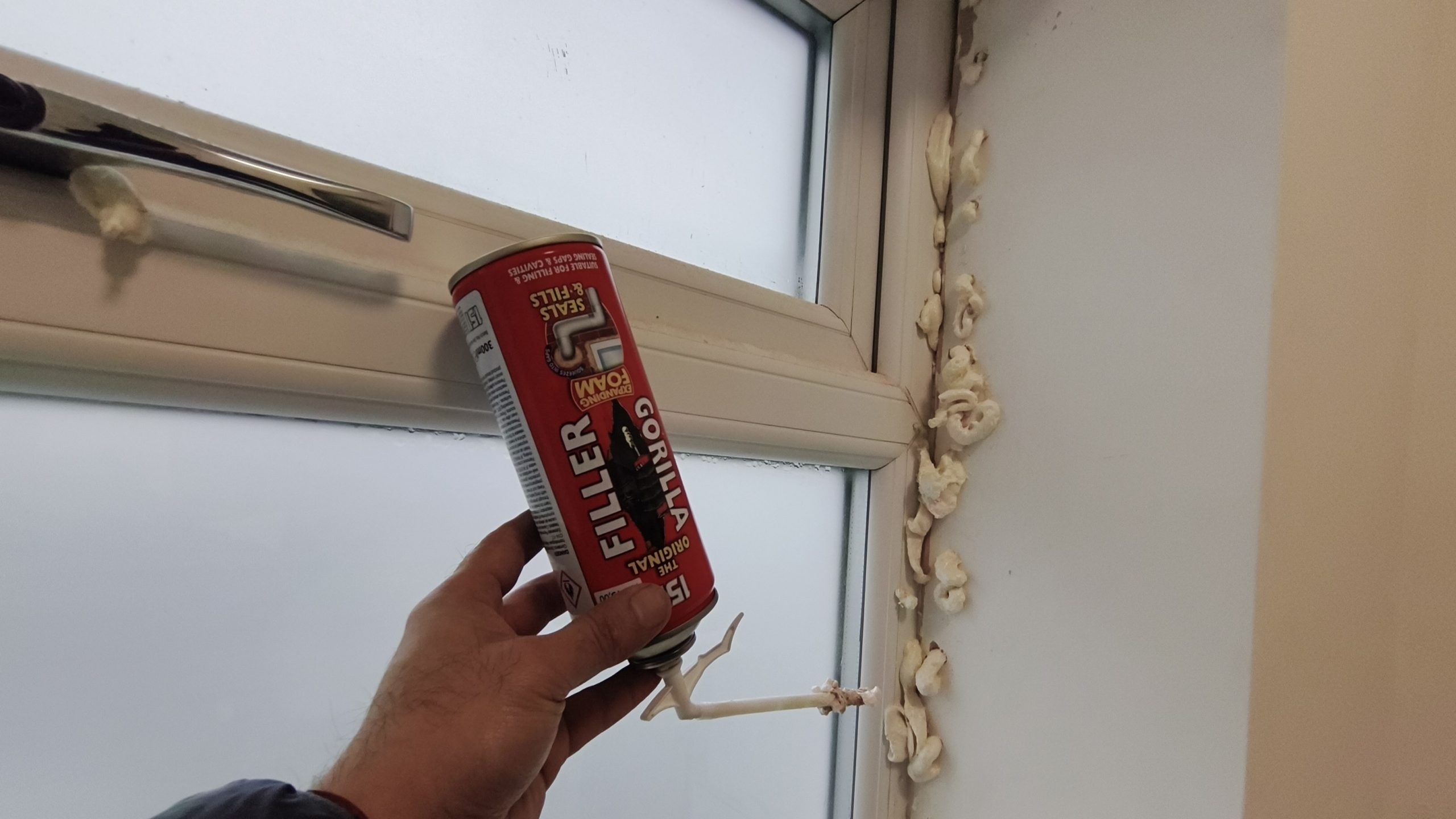
Only use low-expansion “Window & Door” foam. This is critical. Brands like Soudal Window & Door or SWS Flexifoam are designed not to bow frames and remain vapour-permeable for moisture control.
5. Can foam warp or damage windows?
Yes: if you use standard high-expansion foam. It exerts significant pressure while curing, which can bow frames, push plasterboard, and jam opening windows. Low-expansion foam is specifically designed to avoid this.
6. Will this cause damp or “moisture bridging”?
This is highly debated: but cold surfaces are what cause condensation. Closed-cell or vapour-permeable window foam increases surface temperature, which drops the risk of damp. Foam is not the enemy: bad detailing is.
7. Should I seal the outside as well?
Yes: external sealing is equally important. Foam insulates: but sealant keeps water out. Repair failed exterior sealant to ensure rainwater cannot enter the cavity and trap moisture against the foam.
8. Will sealing gaps make condensation worse?
Usually the opposite: provided ventilation is adequate. Raising the surface temperature reduces the risk of air hitting a cold point. You still need active ventilation, such as extractor fans or trickle vents, for proper moisture control.
9. How do you know there is no insulation?
Look for cold plaster around the frame, draughts when closed, or heavy condensation. A thermal camera will show cold bands, and drilling small holes often reveals empty voids or even shopping bags hidden behind trims.
10. How is the foam actually injected?
The DIY approach involves drilling small holes (10 to 15 mm deep) near the frame. Inject foam slowly until it appears at the next hole, indicating coverage. Allow it to cure fully, then trim, seal, and redecorate.
11. Is this a permanent solution?
Yes: it is a long-term fix. Window foam lasts decades and is standard practice in high-quality installations. More invasive solutions like reseating windows are technically better, but much more disruptive.
12. Should I replace my windows instead?
Not automatically. If the frames and glass are sound, insulating the perimeter can save thousands compared to full replacement. Many users avoided costly replacements by fixing the gaps themselves.
13. Biggest mistakes to avoid
Never use regular expanding foam, do not overfill too fast, and never ignore exterior sealing. Do not assume trim equals insulation, and avoid sealing without ensuring ventilation elsewhere in the home.
The Next Objective
Once your thermal envelope is secure: the next step is building the internal workspace environment. Explore our documentation on the Master Garden Office build.
Explore The Studio Pillar →
Zulfiqar Ali
Google-Certified Data Analyst and Managing Director of Trusted Creators. Zulf uses his 20 Years of experience to provide honest: technical documentation via the MrMakestuff and ZulfTalks channels.